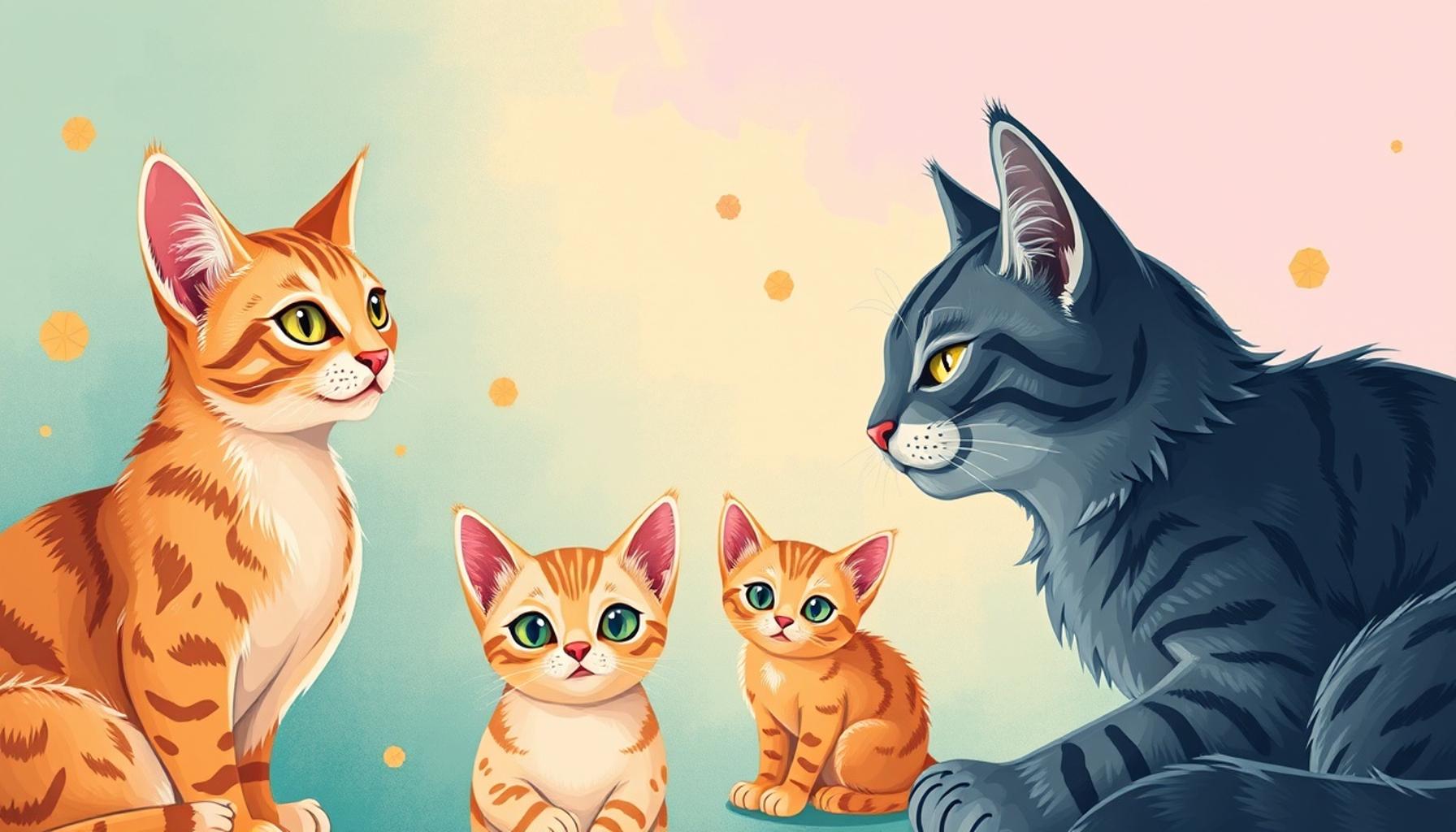
Social Behaviors in Cats: What We Can Learn from Them

Examining the Dynamics of Cat Interactions
Cats, often dubbed as independent creatures, actually showcase a rich tapestry of social behaviors that reveal their need for companionship and communal living. Observations of feline interactions highlight their emotional depth and social complexity. Through a closer examination of these behaviors, we can learn not just about cats, but also about the nature of relationships and communication in general.
Grooming Rituals
One of the most significant aspects of cat socialization is their grooming rituals. When cats engage in mutual grooming, or allogrooming, they aren’t merely cleaning each other; they are solidifying friendships and enhancing their emotional bonds. These moments often occur between cats that are closely bonded, and it’s a behavior reminiscent of nurturing actions found in many social species. For instance, a study published in the journal “Animal Behaviour” indicated that cats that groom each other are less stressed and display decreased aggression. So, next time you see your cats grooming, consider it a sign of their affection and mutual trust.
Vocalizations
Cats communicate using a variety of vocalizations that convey their emotions and intentions. From the gentle purr of contentment to the plaintive meow that signifies distress or hunger, these sounds carry much more than mere noise. Research shows that cats have developed distinct vocal tones specifically for interacting with humans, which differ from those they use amongst themselves. The “solicitation purr,” a sound that indicates a request for food, demonstrates their ability to modify their vocalizations to elicit a response from humans. By paying attention to these nuances, cat owners can better understand their pet’s needs and desires, thereby enhancing the human-feline bond.
Play Fighting
Another fascinating aspect of feline interactions is play fighting. Kittens engage in playful tussles, which serve multiple purposes: they sharpen their hunting skills, establish social hierarchies, and help them learn important boundaries. Play fighting often mimics real combat scenarios, allowing young cats to practice their instincts in a safe environment. Observing adult cats engage in similar activities can also provide insight into their social dynamics. For instance, a seemingly innocent play fight can quickly reveal which cat holds a dominant position in their relationship. Understanding this behavior allows pet owners to enrich their cats’ lives by providing sufficient play opportunities, thus catering to their natural instincts.
Understanding these social behaviors in cats can significantly enhance our interactions with them. As we delve into the intricate world of feline friendships, we not only learn to appreciate our pets more thoroughly, but we also gain insights into the complexities of social interactions that mirror our own. By acknowledging and fostering these behaviors in our daily lives, we can create a harmonious environment for our cats, ensuring their happiness and well-being.
If you ever wondered how our feline friends could teach us more about social harmony, this exploration of their interactions highlights just that. Through grooming, vocalizations, and play, cats demonstrate that relationships are built on communication, trust, and mutual understanding, offering us profound lessons about the essence of companionship.
DISCOVER MORE: Click here to learn about the benefits and challenges of natural feeding for your feline friend
Connecting through Communication and Routines
When we think about the social behaviors in cats, it’s essential to recognize that communication extends beyond just vocalizations. Felines utilize a series of physical cues, body language, and habitual practices to interact with their environment and each other. Understanding these complexities offers valuable insights into how they form connections and establish social norms. By observing specific behaviors, we can better appreciate the depth of feline sociology and adapt our interactions accordingly.
Body Language: The Silent Communicators
Cats are inherently masters of body language, and their postures or movements convey a plethora of emotions and intentions. A cat’s tail position, ear orientation, and body stance can indicate everything from confidence to fear. For instance, a cat with an upright tail and forward-facing ears is often displaying contentment and curiosity, while a puffed-up tail and flattened ears signify aggression or fear. Understanding these signs is crucial not only for cat owners but also for anyone interacting with cats. By recognizing when a cat is feeling threatened or relaxed, we can reduce stress and prevent potential confrontations.
Territorial Behavior
An interesting aspect of feline social behavior is their territorial nature. Cats often feel a strong connection to their environment, marking their territory through scent glands located on their paws, face, and tail. This is a form of communication with other cats, signaling that a particular area is claimed. The role of territory can lead to interesting dynamics, especially when multiple cats coexist. Here are some key points to consider about territorial behaviors in cats:
- Personal Space: Cats enjoy their personal space and may feel insecure when this is invaded, especially by other cats.
- Resource Management: Access to resources—such as food, water, and litter boxes—can heighten territorial disputes, which makes understanding this behavior vital to cat management.
- Marking Territory: Cats may also use urine marking to assert their territory, and this behavior can often be observed when a new cat is introduced to an established home.
By recognizing and respecting a cat’s territorial needs, we can foster a more peaceful living situation, especially in multi-cat households.
The Importance of Routine
Moreover, cats thrive on routine, and establishing a steady daily schedule can significantly improve their sense of security. Cats are creatures of habit, often finding comfort in regular feeding times, play sessions, and general daily interactions with their human companions. In fact, behavioral studies suggest that cats exhibit better overall mental health and lower anxiety levels when their routines are consistent. By harmonizing our habits with their natural instincts, we not only cater to their social needs but also create a harmonious environment aiming for feline contentment.
In summary, the social behaviors of cats provide profound insights into their interactions and relationships. By understanding their body language, respecting their territoriality, and establishing routine, we can create a more fulfilling life for these enigmatic creatures. As we continue to learn from cats, we not only deepen our bond with them but also explore the broader implications of social behaviors that resonate with human experiences.
Understanding Cat Social Behaviors
Cats are often misunderstood creatures, characterized as solitary and aloof. However, a deeper exploration into their social behaviors reveals fascinating insights into their interactions and emotional landscapes. One of the most compelling aspects is their intricate communication styles, which include vocalizations, body language, and scent marking. These subtle cues play a critical role in establishing social hierarchies and bonding among feline companions.
Vocalizations and Body Language
Interestingly, cats possess a rich repertoire of vocal sounds, ranging from purrs to hisses, that convey various emotions and intentions. For instance, a soft purr often signifies contentment and can also serve as a form of self-soothing. In contrast, a loud hiss may indicate fear or discomfort. Observing a cat’s body language is equally important; an arched back may signal aggression, whereas a tail held high can denote confidence and curiosity. This complexity in communication encourages cat owners to become more attuned to their pets’ needs and emotional states.
Social Bonds and Play Behavior
Social behaviors in cats are not solely centered around survival; they form genuine bonds with their human companions and fellow felines. Play is a crucial component of this bonding process, especially among kittens, who engage in mock hunting to improve their skills and establish social camaraderie. Through play, cats learn important lessons about boundaries, assertiveness, and cooperation. Such interactions remind us to nurture our pets’ social instincts and provide them with opportunities to interact with both humans and other animals.
The Role of Environment
The environment in which a cat is raised can greatly influence its social behaviors. Cats raised in isolation may struggle to interact positively with others, while those brought up in social settings are likely to display confident and playful behaviors. Creating a stimulating environment filled with diverse stimuli—like climbing trees, scratching posts, and interactive toys—can enhance their social experiences significantly. By appreciating these social dynamics, we not only improve the well-being of our feline friends but also deepen our understanding of their instinctual needs.
Table: Advantages of Studying Cat Social Behaviors
| Category | Insights |
|---|---|
| Enhanced Understanding | Understanding cat communication helps improve human-feline relationships. |
| Behavioral Insights | Learning about social behaviors can assist in recognizing signs of stress or happiness in cats. |
By uncovering the social intricacies in cats, we open up new avenues for enhancing their lives and enriching our relationships with these remarkable companions.
DISCOVER MORE: Click here to learn how nutrition affects your pet’s behavior
The Bonds of Social Play and Grooming
While communication and territoriality play crucial roles in feline interaction, social play and grooming are equally significant social behaviors that highlight the depth of relationships among cats. These activities are not solely aimed at survival but serve to strengthen social bonds within groups and provide important insights into their emotional well-being.
Social Play: A Foundation for Relationships
Social play is often observed among kittens and younger cats, where chasing, pouncing, and pawing form the core of their interactions. This behavior is essential for developing hunting skills and serves as a means to establish hierarchies and social structures within a group. Interestingly, play is not limited to competition; it also fosters cooperation. For example, when two cats engage in a playful wrestling match, they exchange roles and learn to gauge each other’s strength and intentions, thus enhancing their social intelligence.
Moreover, social play can extend beyond cat interactions. Research indicates that engaging your cat in play can lead to improved behavior and a stronger bond between cat and owner. Toys that mimic prey, such as feather wands or laser pointers, can stimulate a cat’s instinctual hunting drive, leading to a playful and rewarding experience. By incorporating playtime into their daily routine, owners can also alleviate boredom and reduce behavioral issues, showcasing the importance of play in a cat’s overall happiness.
Grooming: The Social Glue
Another fascinating insight into feline social behavior is the significance of grooming, or allogrooming, among cats. This behavior not only aids in physical cleanliness but also acts as a mechanism for social bonding. Cats will often groom each other as a way of reinforcing relationships, particularly among family members or closely bonded companions. This exchange promotes trust and comfort, creating a harmonious atmosphere within the household.
Grooming rituals can also be observed in multi-cat households where one cat may take the role of a groomer and another as the recipient. This behavior can particularly enhance the social dynamic, as it signifies acceptance and reassurance. Additionally, cats that engage in mutual grooming are likely to demonstrate less aggression and heightened cooperation in other contexts, indicating a deeper emotional connection.
Observing Feline Social Dynamics
Understanding these social behaviors is crucial for cat owners looking to create enriching environments. The presence of multiple cats requires keen observation to determine their play styles, grooming norms, and preferred interactions. Such dynamics can greatly influence the well-being of each cat by helping owners recognize signs of stress, aggression, or isolation. For instance, a cat that withdraws from play may need more individual attention or environmental enrichment to alleviate any underlying anxiety.
Incorporating various structures—such as vertical spaces, multiple scratching posts, and cozy hiding spots—can empower cats to express their social needs effectively and safely. Furthermore, promoting positive interactions through play can ensure that your feline companions enjoy a well-adjusted social life.
In summary, exploring the bonds formed through social play and grooming among cats unveils a deeper understanding of their social structures and emotional needs. By fostering environments that respect and enhance these behaviors, we not only contribute to their individual happiness but also learn valuable lessons about connection, trust, and companionship that resonate beyond the feline world.
Dive deeper: Click here to learn more
Final Thoughts on Feline Social Behaviors
As we delve into the intricate social behaviors of cats, it becomes evident that they offer profound lessons on interpersonal relationships and emotional health. From the spirited nature of social play that builds bonds and hones skills, to the gentle act of grooming that fosters trust and companionship, these behaviors reflect a nuanced understanding of social structures not only in the feline world but across species—including our own.
By recognizing and nurturing these social behaviors, cat owners can foster a more enriching environment that promotes well-being and harmony among their pets. Encouraging interactive play and facilitating grooming rituals can help in establishing a sense of security, enabling our feline companions to thrive in various social contexts. This not only mitigates issues such as aggression and stress but also enhances the connection between cats and their human caregivers.
Moreover, studying these behaviors inspires reflections on our social interactions. The importance of play, trust, and mutual understanding is a universal theme that transcends species boundaries. By observing how cats express their emotions and set their social boundaries, we can cultivate similar qualities in our human relationships—strengthening bonds through communication, cooperation, and care.
In conclusion, embracing the fascinating social behaviors of cats enriches our appreciation for their emotional complexity. As we learn from them, we also remind ourselves of the values of empathy, connection, and community that are essential to a fulfilling life, both for ourselves and our beloved pets. Let us continue to explore and celebrate these wonderful creatures while applying the insights gained into our daily interactions.